The Charleston Sofa Super Store Fire: The Night That Rewrote How We Fight Fire
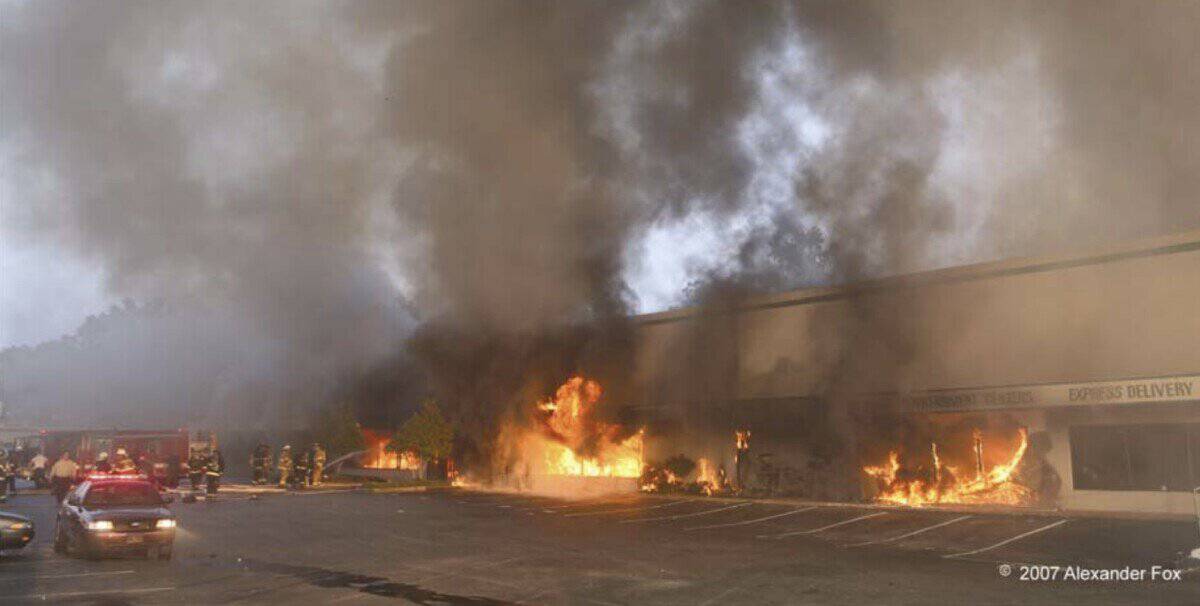
On the evening of June 18, 2007, nine firefighters walked into a burning furniture store in Charleston, South Carolina, and never walked out. It was the deadliest single loss of American firefighters since September 11, 2001. But the Sofa Super Store fire is remembered for more than its body count. It became a turning point — a tragedy so thoroughly studied, so publicly dissected, that it forced the American fire service to confront hard truths about how it trained, commanded, and risked the lives of its people. Nearly two decades later, the tactics you’ll find on modern firegrounds carry the fingerprints of that night.
This is the story of what happened, what went wrong, and what the fire service learned from the men now known simply as the Charleston 9.
A “Routine” Fire That Wasn’t
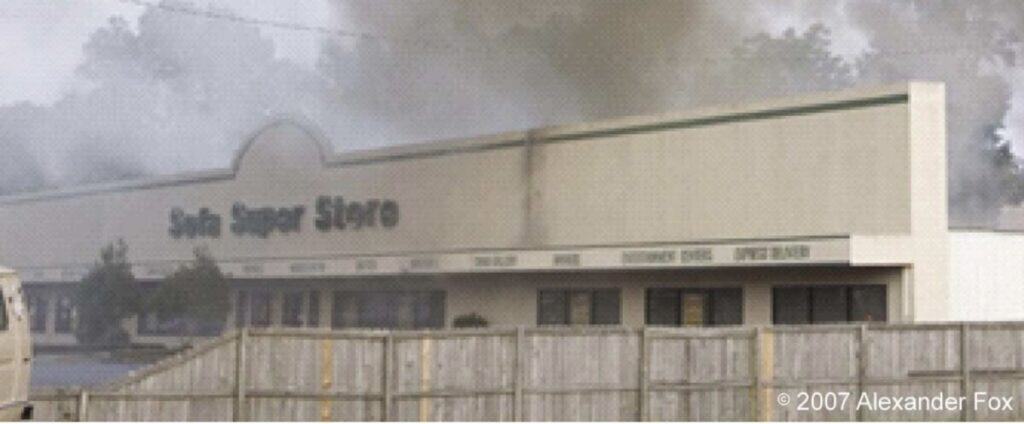
The call came in around 7:00 p.m. as what appeared to be a minor trash fire near the store’s loading dock. Crews from the Charleston Fire Department, joined by St. Andrews firefighters, responded to a sprawling commercial building on Savannah Highway — a showroom connected to a cavernous warehouse packed with sofas, foam, and synthetic upholstery.
That fuel load mattered. Modern furniture burns hot and fast, releasing enormous heat and thick, toxic smoke. What looked like a manageable fire at the dock quickly found its way into the main structure, where it fed on a warehouse full of petroleum-based materials. Inside, firefighters advanced hoselines through the showroom trying to reach the seat of the fire. Conditions deteriorated faster than anyone on scene recognized.
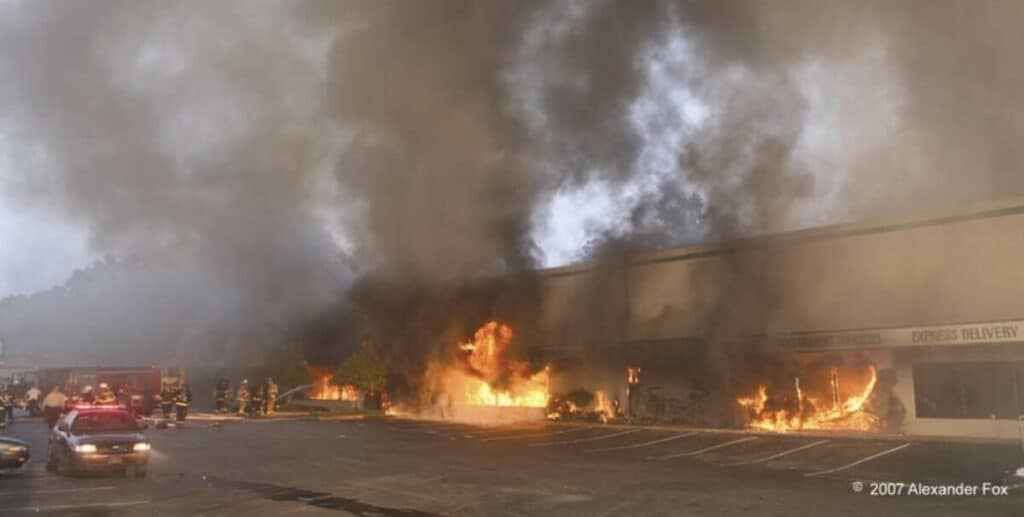
Then the building turned on them. Fire raced through the open, undivided space overhead. Visibility collapsed. Crews deep inside became disoriented in the maze of showroom furniture, running low on air, unable to find their way out. Mayday calls came over unreliable radios. Before rescuers could reach them, the structure failed. Nine firefighters died: Captain Louis Mulkey, Captain Mike Benke, Captain William “Billy” Hutchinson, Engineer Mark Kelsey, Engineer Rodney “Brad” Baity, Assistant Engineer Michael French, Firefighter James “Earl” Drayton, Firefighter Brandon Thompson, and Firefighter Melven Champaign.
The Store of the Charleston Nine and the Sofa super Store Fire is on my new YouTube Channel, The Last Alarm.▶ Watch here: https://youtu.be/A9rmcIZGH6w?si=wzYnUOfrIA9JH3hg
The Investigations: A Perfect Storm of Failures
In the months and years that followed, the fire was examined more closely than almost any incident in modern fire service history. The National Institute for Occupational Safety and Health (NIOSH) and the National Institute of Standards and Technology (NIST) both produced landmark reports. Their conclusions were sobering, and they were remarkably consistent: this was not one catastrophic mistake, but a chain of failures that lined up in the worst possible way.
The investigators pointed to a collection of contributing factors that, taken together, doomed the response. There was no functioning incident command system. As ranking officers arrived, command was never formally established or transferred. Instead, separate chief officers directed fire attack at different parts of the building — the loading dock and the main showroom — with no coordination between them and no single stationary command post overseeing the whole scene. Radio communications were unreliable, making it nearly impossible to track crews or hear their calls for help. Air tanks weren’t full when crews went to work, cutting into the time they had inside. Water supply was inadequate and the hoselines chosen were too small to fight a fire of that size and fuel load. On top of it all sat the building itself: code violations, no automatic fire sprinklers, and a massive, uncompartmentalized space designed to sell furniture, not to survive a fire.
NIOSH ultimately issued 43 recommendations to prevent a repeat. NIST added 11 more focused on building and fire codes. One finding stood out above the rest, and it is the sentence that has echoed through firehouses ever since: had the building been protected by automatic sprinklers, the fire almost certainly would have been contained to the loading dock where it started. Nine men would have gone home.
What the Fire Service Actually Changed
It’s one thing to write recommendations. It’s another to change a culture built on tradition and aggression. The lasting significance of Charleston is that it did both — and the changes reached far beyond South Carolina.
Incident command became non-negotiable. The single loudest lesson of Charleston was the cost of an unmanaged fireground. The image of multiple chiefs running independent, uncoordinated attacks with no unified command post became a permanent teaching example. Departments across the country recommitted to establishing a clear, stationary incident commander early, running accountability systems that track every crew, and refusing to let a scene devolve into freelancing. What had been treated in many places as a formality became understood as a life-safety system.
Tactics shifted from reflexive aggression to size-up and strategy. For generations, the American fire service prided itself on the aggressive interior attack — push in, find the fire, put it out. Charleston forced a hard question: when is that appropriate, and when is it getting people killed? A large commercial building, heavily loaded with synthetic fuel, with no occupants known to be trapped, is a very different problem than a house fire. The tragedy accelerated a national conversation about matching strategy to conditions, recognizing when a fire has moved beyond a survivable interior attack, and being willing to fight defensively. Risk-a-lot-to-save-a-lot; risk-little-to-save-little; risk-nothing-to-save-nothing became more than a slogan.
Charleston rebuilt its own department from the ground up. The Charleston Fire Department did not paper over the tragedy — it overhauled itself. The department mandated that all firefighters complete Firefighter I and Firefighter II certification, a basic standard that a surprising number of members had not held. It rethought how resources arrive on scene. Before 2007, the department dispatched the minimum: roughly two engines, a ladder, and a battalion chief to a structure fire. Today a structure fire draws a far heavier initial assignment — multiple engines, a ladder, a heavy rescue, and several battalion chiefs, with one engine company dedicated solely to rapid intervention, standing by to rescue trapped firefighters. Each company now arrives with predetermined fireground assignments, cutting the confusion over who does what. Ladder crews were retrained to focus on ventilation and “softening” the structure rather than pulling hoselines. New stations, better equipment and technology, and a stronger emphasis on firefighter mental health followed.
Building and fire codes drew national attention. NIST’s recommendations pushed communities to adopt and actually enforce current model building and fire codes — and reignited the argument for sprinklers in large commercial occupancies. The finding that sprinklers would likely have contained the fire gave code advocates one of the most powerful case studies they’ve ever had.
The way we learn from line-of-duty deaths matured. Perhaps the most enduring legacy is cultural. Charleston became a model for how the fire service studies its own tragedies — openly, rigorously, and without flinching. The willingness to publish uncomfortable findings, to name the command failures and the outdated tactics, helped normalize honest after-action review. That transparency is itself a form of respect: it turns loss into instruction so that the next crew doesn’t repeat it.
Why It Still Matters
The Charleston 9 are honored every June with memorials, runs, and moments of silence. But the truest memorial isn’t a plaque. It’s the incident commander who establishes command before the first line goes in. It’s the officer who calls a defensive attack on a well-involved commercial building instead of sending crews into a collapse zone. It’s the recruit learning Firefighter I standards, the RIT team staged and ready, the code inspector insisting on sprinklers. Every one of those is a thread that runs back to Savannah Highway on June 18, 2007.
Tragedies like this one are how the fire service, at terrible cost, learns. The job of everyone who came after is to make sure those lessons stay learned.
dapibus leo.
Watch “The Last Alarm”
f this story moved you, I’d be grateful if you’d take a few minutes to watch my new video. It’s the very first video on my YouTube channel, The Last Alarm, and it’s dedicated to telling the story of the Charleston Sofa Super Store fire and honoring the nine firefighters who gave their lives that night.
Launching a channel is a leap, and this first one means a lot to me. Watching, liking, and subscribing genuinely helps — it puts these stories in front of more firefighters, families, and members of the public who should know them.
▶ Watch here: https://youtu.be/A9rmcIZGH6w?si=wzYnUOfrIA9JH3hg
Thank you for reading, and for keeping the memory of the Charleston 9 alive.